


Cranio NY Blog
CranioNY is the blog of New York Craniofacial and Plastic Surgeon, Dr. Nicholas Bastidas.
Congenital Nevus (moles)
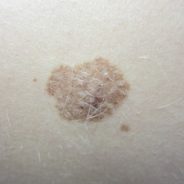
Congenital Nevus (moles)
A congenital nevus, “mole”, “birthmark”, is a nest of pigmented cells called melanocytes located underneath the skin causing a discoloration. A congenital nevus is present at birth and carries a higher rate of possible conversion to the cancer melanoma.
Treatment involves either consistent monitoring at least on a yearly basis with your dermatologist or a complete surgical excision by your surgeon. Most can be removed surgically leaving a thin linear scar. In some instances, if very large, excision may require tissue expanders (balloons) placed to stretch the normal skin to reconstruct the area after the excision, or even several excisions (serial excisions) to remove the nevus in its entirety.

Cleft Lip


Preop Bilateral Cleft Lip

Postop Bilateral Cleft Lip
Cleft Lip
A cleft lip is a defect (gap) between the lip and or nostril edges that may occur commonly in up to 1/1000 newborns. It may often be diagnosed on prenatal ultrasound around 20 weeks of gestation. Surgical repair of the skin, mucosa, nose, and lip muscle occur around 3-4 months of age and may require presurgical molding by a process called NAM. Good aesthetic and functional results can be obtained, however, minor revisions may be necessitated when your child is older (particularly in the nose) due to the unpredictability of facial growth.

Unilateral Incomplete Cleft Lip

Unilateral Incomplete Cleft Lip Postop

Bilateral Cleft Lip Preop

Bilateral Cleft Lip

Postop Blateral Cleft Lip and Nasal Reconstruction

Scleroderma
Romberg’s Disease / Linear Scleroderma
Wasting of the facial fat can lead to severe facial asymmetry in patients with Romberg’s disease and Scleroderma. Plastic Surgeons can help augment the facial tissues using fat grafting techniques and occasional large tissue transplants from other areas of the body (thigh and back) and restore facial symmetry.
Cleft Palate
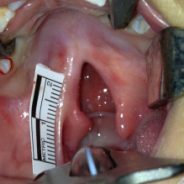

Cleft Palate
A cleft palate is a hole in either the hard and/or soft palate due to failure of these structures to fuse in the midline during fetal growth. This hole creates a connection (fistula) between the nose and mouth, allowing food to regurgitate through the nose, making feeding at times difficult. Specialty bottles and nipples are available to help your child feed normally prior to surgical repair (1 year of age). Surgical repair is delayed until one year to allow your child to grow, allowing a better chance of a successful repair. Most importantly, during the surgery, the muscle (levator palatini) is repaired, allowing for normal speech by sealing off the nose from the mouth during muscle contraction. Statistically, up to 20% of children require a secondary procedure to improve speech, when this muscle fails to work properly even after repair (VPI).
Cleft Rhinoplasty
Cleft Rhinoplasty
Clefting of the lip almost invariably involves the nose, where the rim of the nose is often malpositioned. In addition, the septum is often deviated causing obstruction and decreases passage of air through the nose. A remodeling of the tip of the nose (tip rhinoplasty) can be offered at any time to help improve the appearance. A full cleft septorhinoplasty is performed at skeletal maturity and involves correction of the complete deformity as well as the airway.
Prominent Ear
Prominent Ear
Large protruding ears can be a source of discomfort and teasing for children and adults. When discovered at birth, a small appliance can be fixed to hold the ear in an anatomic position in a process known as ear molding. The molding apparatus is usually worn for 4-6 weeks can possibly prevent the need for surgery.
Otoplasty is a surgical option, which involves reshaping the cartilage of the ears to help approve the appearance. Sutures are placed internally to hold the new position and immediate results can be obtained. This surgery is performed under general anesthesia for children, and can be performed under local anesthesia for adults. A headband must be worn for 2-3 weeks post-operatively to help support the repair.
Branchial Cleft
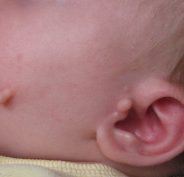

Branchial Cleft
Branchial clefts/remnants are leftover structures from fetal development. These lesions may be found along a track from the ear to the lower jaw and neck. Surgical removal is advocated to reduce the risk of infection as well as improve the appearance.
Scalp Reconstruction
Scalp Reconstruction
Cancers or trauma can leave large defects in the scalp or areas of missing hair (alopecia). Large rotational flaps or sometimes tissue expanders (balloons) are needed to re-establish the hairline (remove areas of alopecia) and close complex scalp wounds.
Neurofibroma
Neurofibroma
Neurofibroma is a benign tumor of the tissue that surrounds nerves. It may be associated with a syndrome known as von Recklinghausen and involve multiple parts of the body. A small percentage of these tumors can become malignant and may present with pain. Wide local excision is advocated to remove these tumors when suspicious of cancer. In addition, the tumors may be thinned out to help approve the appearance and form of the affected area.
Midface Hypoplasia
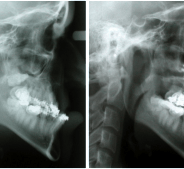

Example of a Lefort 1 Advancement Procedure
Midface Hypoplasia
Cleft palates can be related to having decreased growth of the upper jaw leading to a retruded midface. The upper teeth should sit in front (anterior) to the lower teeth in a normal bite. Orthognathic surgery (lefort 1) can be performed to lengthen the jaw and improve projection. This has the benefit of correcting your bite as well as significantly improving your profile appearance.


